


.png)
Nature at Forrest Delicate Nobby A Photographic Adventure
Updated: 4 minutes ago

Each step offers a new view and each photo records a story
Forrest Delicate Nobby is surrounded by nature. Birds, mammals, ocean views and amazing landscapes. It might be that noise in the scrub that leads you to a young echidna out looking for lunch. Or the whales that just breached while you were walking along the beach. Photos create the gateway to a lost memory. They allow you to share that memory in the very best way.
Discovering the extraordinary wildlife and landscapes around Crescent Head and Forrest Delicate Nobby
Over the years, my interests have shifted towards wildlife and nature. I've also learned that every photographic opportunity has something to offer, whether it's a sweeping landscape, a historic building, a city street or a family occasion.
But some of the most memorable photographs I've taken have been surprisingly close to where I was staying and the great part about a holiday is new experiences.
We often admire photographs of exotic birds and animals taken in remote locations. Yet nature surrounds us. It might be in our backyard, a local park, a nearby reserve, along a river or on a beach. You don't need to fly halfway around the world to discover it. Sometimes, all you need to do is step outside, slow down and look around.
Watch. Wait. Listen. Respect.
These four words have become my personal approach to wildlife photography and business.
Just like businesses birds and animals don't follow our preferred schedules. They don't pose on command, and the best moments often happen when we stop chasing the perfect shot and allow nature to unfold around us.
Nature Close to Home
Day to day much of my photography is based along the east coast of Australia:
The small birds that visit us at Forrest Delicate Nobby, near Crescent Head on the NSW Mid North Coast, and the powerful owls that return year after year near our home in Sydney.
Surrounded by beaches, parks and reserves. There is always something to calm your mind in a local park.
Each moment and location tells a different story, and photography allows those moments to live on long after the journey ends.
Birds and Wildlife: Patience Above All
Bird and wildlife photography is as much about observation as it is about equipment. Animals and birds don’t adhere to a schedule, nor do they pose on command. That’s why my personal mantra for wildlife photography is simple: Watch - Wait - Listen - Respect.

Birdlife Australia has developed Ethical Birdwatching Guidelines. The welfare of birds always comes first, do not stress birds or expose them, or yourself, to danger.
Do not stress birds or expose them to danger
Do not use spotlights, call playback or drones
Avoid handling birds except when absolutely necessary (e.g. an injured bird in danger)
Help bird conservation by recording observations and standardised surveys in Birdata
When providing food or water for native birds, do it safely and appropriately for the birds
Care for the birds’ habitat
Respect the law and the rights of others
The H5 bird flu has also added a key safety point - do not handle sick or deceased birds. Call the H5 bird flu hotline - call 1800 675 888
Patience is everything.
The best moments often come when you stop chasing the shot and allow the environment to unfold around you. Birds, in particular, reward stillness. Whether it’s a tiny fairy-wren flitting through the undergrowth or a powerful owl chick observing the world from a branch, patience pays off.
Landscapes and Scenery
Beaches, Rivers and Lagoons
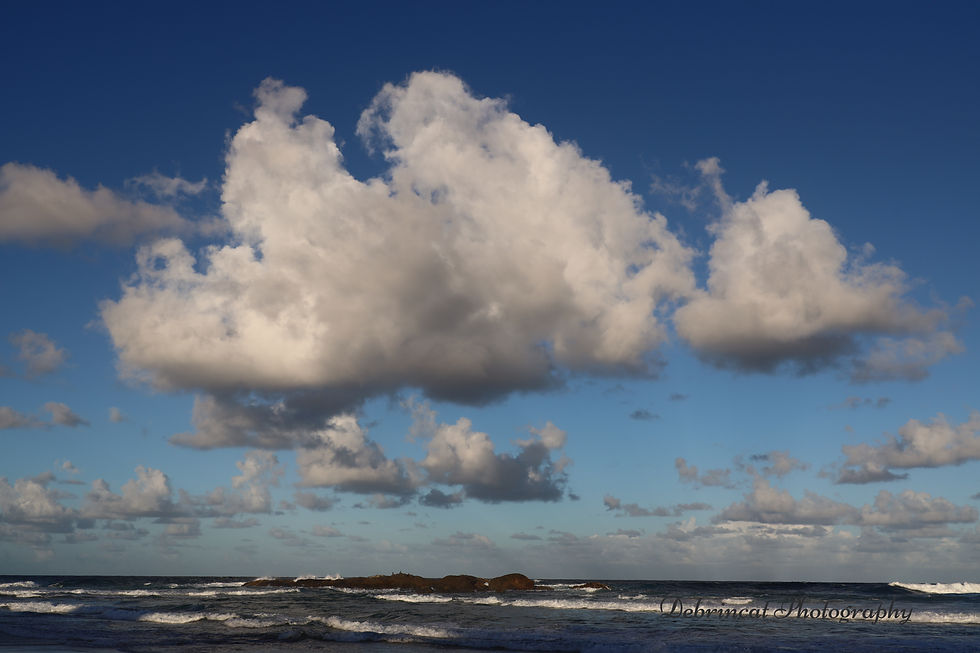
It’s not always about wildlife; the local beaches, rivers and lagoons have provided some of my most memorable moments. The opportunities change continuously. It’s the quiet transitions; the changing light, softening colours, and stillness on the water, that linger long after you leave. Photography becomes less about chasing a subject and more about being present, allowing nature to reveal itself at its own pace.
Equipment That Fits the Moment
As technology evolved, so did my cameras. Canon has always been my preferred brand, although I've experimented with others. Today, even a trusty iPhone can capture remarkable images. For most of my photography, I use a Canon R6 Mk III. This camera provides the speed, flexibility, and image quality needed for fast-moving wildlife and more relaxed landscape work. I also have a backup camera an older Canon R which is still great to use.
Birds & Wildlife
My go-to setup includes the Canon RF 100–400 mm zoom lens, often paired with a 2× extender. This combination gives me a reach of 800 mm. Wildlife doesn’t always come to you, and that extra distance can make all the difference, allowing you to capture natural behaviour without disturbing the subject. I also have a Tamron 150 - 600 mm zoom that is good but a tripod is needed.
The lenses also includes a Canon RF 24 - 240 mm, Canon Macro lens and Tamron 28 - 300 mm AF lens.
If you use a long lens you might find a good tripod useful. I have two one light for travelling and a second more heavy duty.
Software for editing the images can help fix some problems and show a more professional image. Photoshop and Light Room are my main editing tools, and also learning Topaz Photo (AI based).
Landscapes & City Scenes
When I travel light, I rely on the Canon RF 24–240 mm lens. It’s versatile, easy to carry, and perfect for everything from coastal landscapes to spontaneous street scenes.
Camera Settings: Control with Flexibility
I typically favour Manual (M) mode, though Av (Aperture Priority) and Tv (Shutter Priority) also have their place depending on conditions. I’ve set up custom camera modes specifically for bird photography, including fast shutter speeds up to 1/3500 sec for birds in flight and incredibly fast subjects like hummingbirds.
Lighting can always be an issue and flash doesn't work with wildlife. So increase your ISO setting to get good quality light and a higher shutter speed. If you use a reasonable camera it will be fine.
For most of my photography, I use a combination of autofocus and manual focus, depending on the subject and conditions. Modern cameras have exceptional and fast autofocus capabilities.
That said, settings are merely tools. Comfort and familiarity with your camera are far more important than chasing perfection on the dial. Don’t hesitate to use the Auto mode that most cameras offer; it will strive to provide you with the best photo possible.
Camera maintenance is crucial, especially in areas with high humidity, rain, or dust. Take care of your cameras and lenses, and they will yield the best results. Here are some top tips:
Consider using a high-quality protective or UV filter when conditions warrant it. A lens hood also provides useful physical protection.
Always use a lens cap to protect the lens from dust and fingerprints.
Employ a lens hood to prevent lens flares in your photos.
Always carry extra batteries; you don’t want to miss a special moment with a dead camera.
Perform basic cleaning and maintenance often; lens smudges and dust don’t disappear after the photo is taken.
Invest in a good-quality, waterproof backpack.
Any Time Is The Right Time
Photography often involves an element of luck. Being in the right place at the right time can make all the difference. But the opportunities are constantly changing with the light, the seasons, the weather and the behaviour of your subjects.
We spend a lot of time photographing powerful owls that live near our Sydney home.
Australia's largest owl, the powerful owl is an apex predator found mainly in eastern and south-eastern Australia. Unfortunately, the loss of suitable forest habitat and mature, hollow-bearing trees threatens its future.
Watching these remarkable birds over many years has been a wonderful experience. Returning to the same location allows us to observe familiar subjects, discover changes in their behaviour and, occasionally, witness the arrival of a new generation.
The challenge is knowing when to photograph and when to simply observe. Wildlife must always come first, especially around nesting birds.
Sometimes, the most memorable experience isn't the photograph you take. It's the moment you witness.

Photography can be fun - Nature can be harsh
One of my photos has been entered into the WWF Photography for Nature competition. The photo is one of the Powerful Owl fledglings for this year that unfortunately was killed by poison most likely from a rat or mouse bait. Although many Australian outlets and retailers have removed these types of baits from the shelves they are still available and maybe even in your home. These baits are fatal to many native birds and mammals. Maybe this photo will help people understand the problem. Please spend a dollar and vote for the Powerful Owl Fledgling.
Voting opens on 1st October and you can vote at Photography for Nature.
Photography Is for Everyone
One of the questions I’m asked most often is:
What do you need to get started in wildlife photography?
The answer is simple: yourself and a camera.
You don’t need to spend thousands of dollars to get started. Begin with what you have. Take photos and share them with friends. Learn as you go. When you’re ready, countless online photography courses and communities await you. However, none of these can replace time spent outside, paying attention.
Major Photography Organisations & Federations
Australian Photographic Society (APS): Offers national competitions, honours, and community engagement for all skill levels.
Federation of Camera Clubs (NSW) Inc: Supports over 72 clubs in NSW/ACT with training, insurance, and competitions.
Photographic Society of Queensland (PSQ): Represents clubs throughout Queensland.
Victorian Association of Photographic Societies (VAPS): Supports clubs in Victoria.
Western Australia Photographic Federation (WAPF): Connects photographers in Western Australia.
Tasmanian Photographic Clubs List: A list of Tasmanian photographic clubs.
Enjoy the Moment
Final Chapter: Forrest Delicate Nobby
Above all, remember to relax and enjoy the experience.
A camera allows us to capture extraordinary details, but sometimes there's even more to discover when we lower the viewfinder and simply look around.
After more than 50 years of photography, I've learned that the most important equipment isn't the camera or the lens. It's curiosity, patience and a willingness to observe.
There are over a 100 species of birds that have been recorded around Forrest. This short Youtube video just shows a few of those. Walking through the reserve and listening for the birds is the ultimate calming experience. You can find more Australian birds and mammals on the Forrest YouTube channel.
Every picture tells a story.
The moments in nature that we capture can never truly be forgotten.
© 2026 Debrincat Photography

Comments